

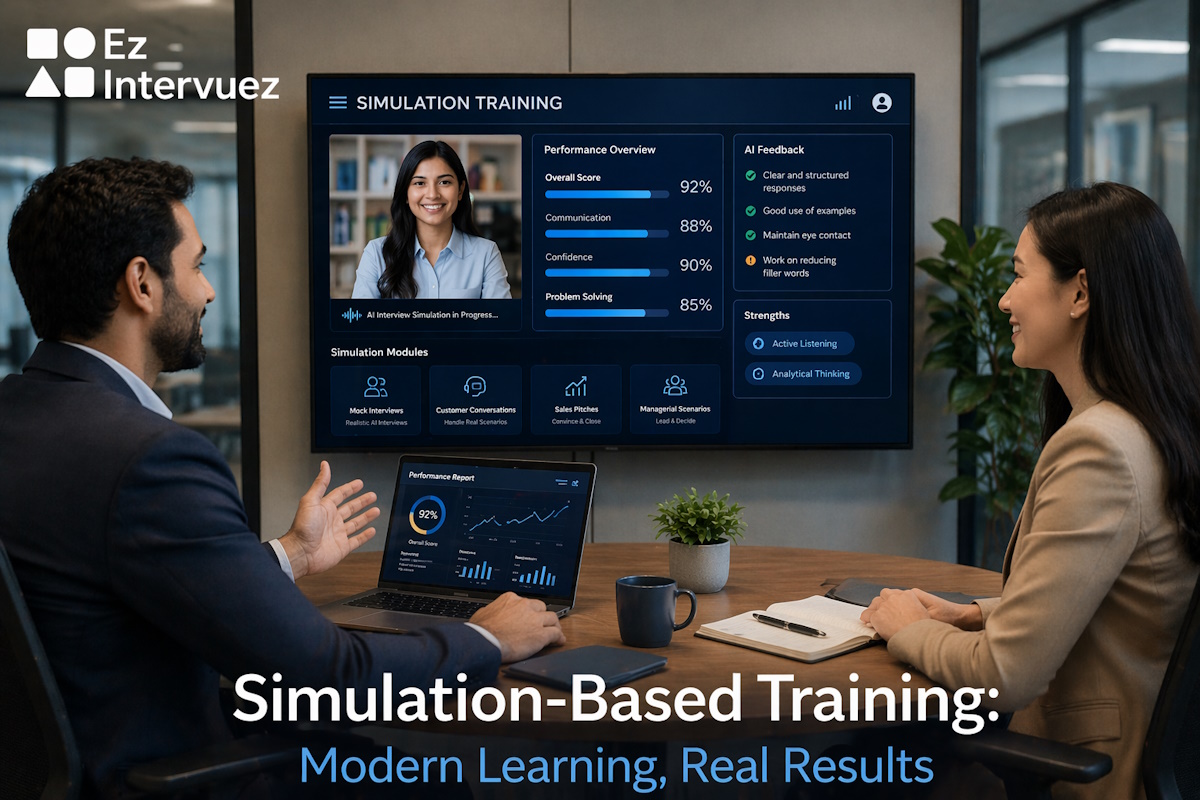
A modern-day business is moving at a pace where traditional static training is no longer enough. For modern teams to stay competitive, they need more than just theory; they need experience. This is where a revolutionary approach comes into play. If you have been searching for a way to bridge the gap between knowing and doing, this guide explores everything you need to know about the most effective method available today.
By the end of this guide, you will understand how simulation based learning can transform your workforce, the role of AI simulation training in the modern office, and how to implement these strategies to drive measurable ROI.
Ready to experience simulation-based training in action?
Defining Simulation-Based Training
At its core, simulation-based training is an experiential learning technique. Unlike passive learning, where a student listens or reads, simulation requires the learner to act. It uses tools—ranging from simple role-playing to advanced digital platforms—to mirror the challenges of a specific job role.
Whether it is a customer service representative handling a difficult caller or a manager conducting a performance review, simulation-based learning allows individuals to practice their responses, make mistakes, and receive feedback without any real-world consequences. This safe-to-fail environment is the secret to building genuine confidence and competence.
Why Modern Teams Need Simulation-Based Learning
The modern workplace is complex. Teams are often remote, customer expectations are at an all time high, and technical skills become obsolete faster than ever. Many organizations are now rethinking their approach after realizing why corporate training fails, as it often focuses more on theory than real world practice. Here is why simulation based training is the answer to these challenges:
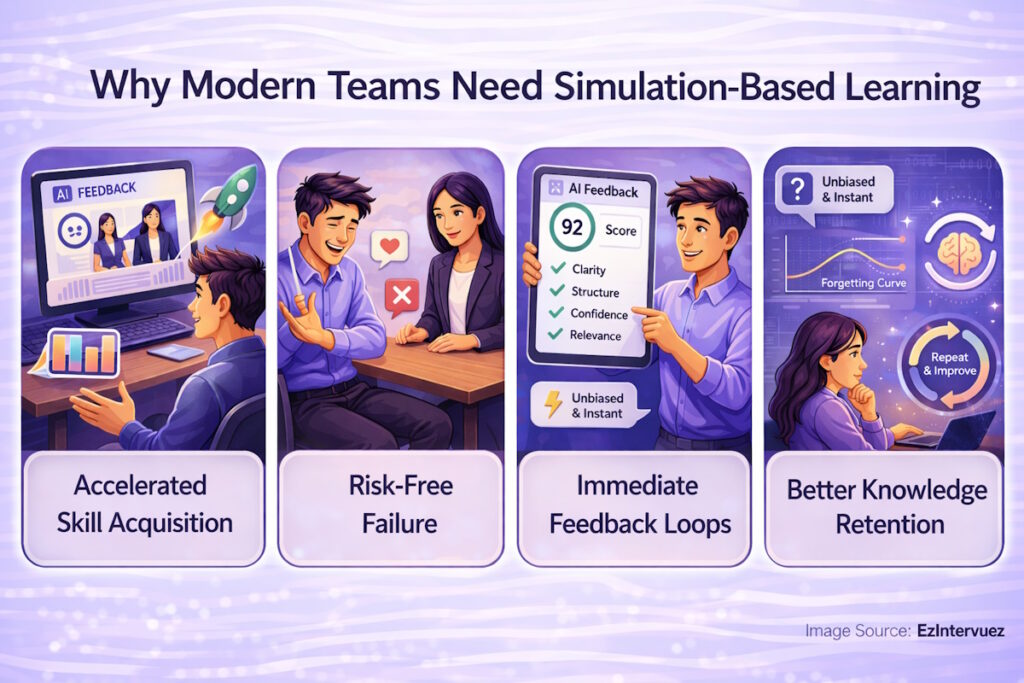
1. Accelerated Skill Acquisition
Traditional training can take months to show results. Because simulation based training focuses on active participation, it significantly shortens the learning curve. Learners engage with the material on a deeper cognitive level, leading to faster mastery of complex tasks.
2. Risk-Free Failure
In the real world, a mistake during a high-stakes client meeting can cost a company thousands of dollars. In a simulation based learning environment, a mistake is simply a data point. It provides a laboratory where employees can experiment with different approaches to see what works best.
3. Immediate Feedback Loops
One of the greatest flaws of traditional workshops is the delay between the action and the critique. AI simulation training platforms provide instant, data-driven feedback. This allows the learner to pivot immediately, reinforcing correct behaviors and correcting errors in real-time.
4. Better Knowledge Retention
Studies consistently show that we remember only 10% of what we read but 90% of what we do. By immersing employees in realistic scenarios, simulation based training ensures that the lessons stick long after the training session is over.
What if your team could practice real-world scenarios without any risk?
The Evolution of AI Simulation Training
While simulation has existed for decades in fields like aviation and medicine, the advent of Artificial Intelligence has brought it to the corporate mainstream. AI simulation training is the next frontier of workforce development.
Unlike static simulations that follow a linear path, AI simulation training uses machine learning and natural language processing to create dynamic, unpredictable interactions. For example, an AI-powered customer persona can react differently based on the tone of the employee’s voice or the specific words they use.
This level of realism was previously impossible. Now, AI simulation training allows for:
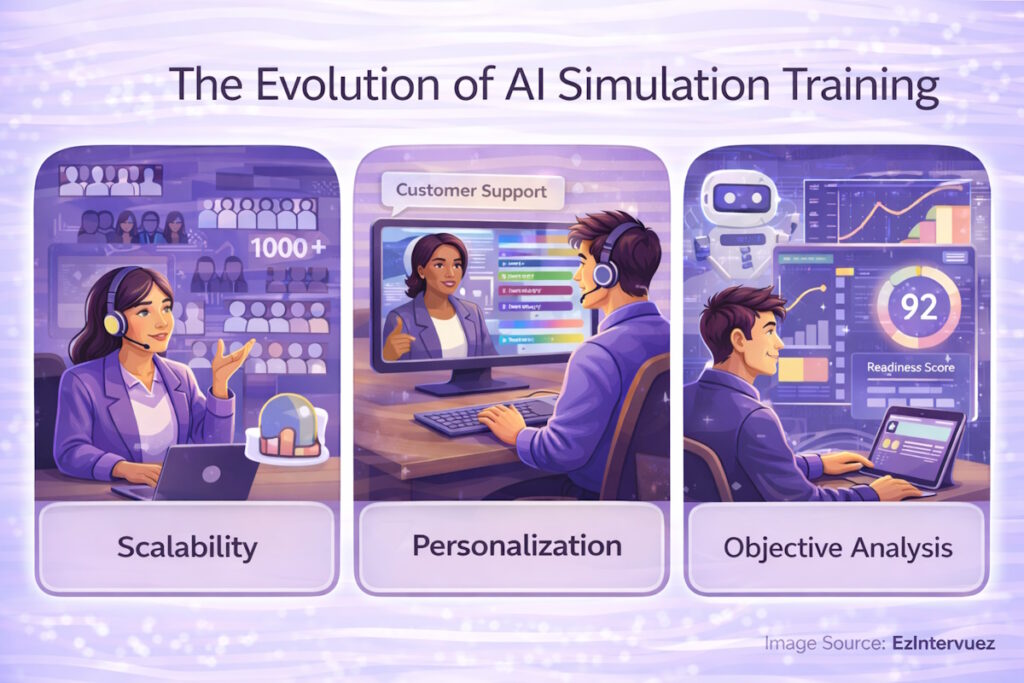
- Scalability: You can train thousands of employees simultaneously without needing thousands of human instructors.
- Personalization: The AI identifies specific weaknesses in a learner’s performance and adjusts the difficulty or the scenario to address those gaps.
- Objective Analysis: AI removes human bias from the evaluation process, providing clear metrics on communication, empathy, and technical accuracy.
Key Types of Simulation-Based Training
To build a high-performing team, you must choose the right format for your goals. Here are the most common types of simulation based learning used today:
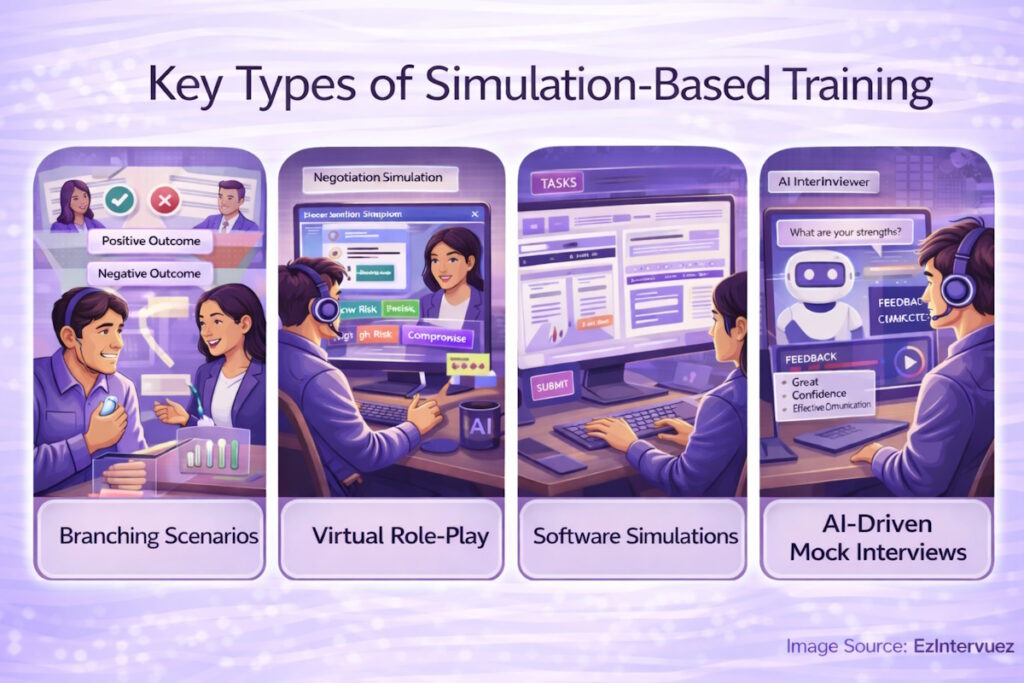
Branching Scenarios
These are digital simulations where a learner is presented with a situation and must choose from several options. Each choice leads to a different outcome, illustrating the cause-and-effect relationship of their decisions.
Virtual Role-Play
Commonly used for soft skills, virtual role-play involves interacting with a digital avatar or a recorded scenario. This is particularly effective for sales training, leadership development, and conflict resolution.
Software Simulations
For technical teams, software simulations provide a replica of the tools they will use daily. This allows them to explore the interface and practice workflows without the risk of deleting real data or breaking live systems.
AI-Driven Mock Interviews
A specialized form of AI simulation training, these sessions prepare candidates or internal team members for high-pressure interviews. The AI asks relevant questions and analyzes the response for clarity and confidence. This approach is especially useful in ai interviews, where candidates need to think quickly and respond naturally in real time situations.
How to Implement Simulation-Based Training in Your Organization
Moving from traditional methods to simulation based learning requires a strategic approach. Follow these steps to ensure success:
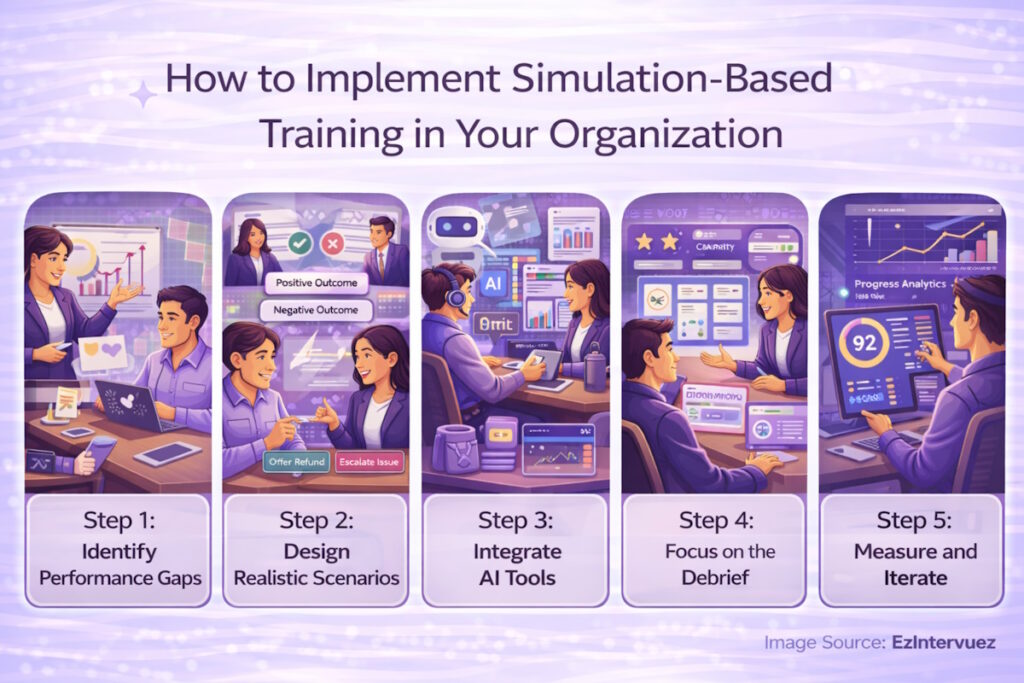
Step 1: Identify Performance Gaps
Don’t simulate for the sake of simulation. Look at your data. Are sales closing rates low? Is customer satisfaction dropping? Use simulation based training to target the specific areas where your team is struggling.
Step 2: Design Realistic Scenarios
The effectiveness of simulation based learning depends on its realism. Scenarios should reflect the actual language, tools, and pressures your team faces. If the simulation feels too easy or fake, learners will not engage.
Step 3: Integrate AI Tools
To make your program truly modern, incorporate AI simulation training tools. These platforms allow for 24/7 practice and provide the deep analytics needed to track progress over time.
Step 4: Focus on the Debrief
The simulation is only half of the process. The real learning happens during the debrief. Ensure your team has time to review their performance, understand their mistakes, and plan how to apply what they learned to their actual jobs.
Step 5: Measure and Iterate
Track the impact of your simulation based training on key business metrics. Are new hires ramping up faster? Is the quality of client interactions improving? Use this data to refine your simulations and keep them relevant.
The ROI of Simulation-Based Learning
Investing in simulation based training is not just about better education; it is about the bottom line. Organizations that adopt AI simulation training see significant returns in several areas:

- Reduced Training Costs: Digital simulations eliminate the need for travel, physical classrooms, and expensive human facilitators.
- Lower Turnover: Employees who feel competent and confident in their roles are more likely to stay with the company, helping businesses reduce employee turnover over time.
- Increased Productivity: By shortening the time it takes to master a skill, employees become productive members of the team much sooner.
Best Practices for Success
To get the most out of your simulation based learning initiatives, keep these best practices in mind:
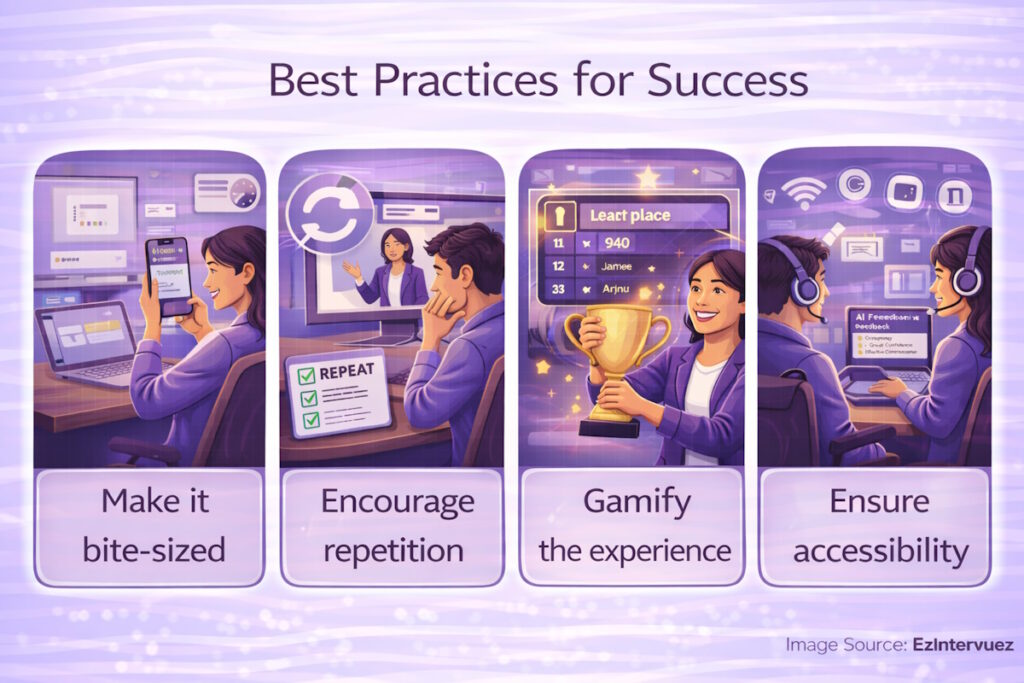
- Make it bite-sized: Instead of one long session, use short, frequent simulations to prevent cognitive overload.
- Encourage repetition: The beauty of AI simulation training is that learners can try a scenario as many times as they need to get it right.
- Gamify the experience: Use leaderboards, badges, and levels to make the training engaging and competitive.
- Ensure accessibility: Your simulations should be easy to access on various devices, allowing teams to practice whenever it fits their schedule.
The Future of Team Development
As we look toward the future, the integration of VR, AR, and even more sophisticated AI simulation training will become the standard. The organizations that thrive will be those that move away from passive learning and embrace the power of doing.
Simulation based training provides the bridge to that future. It empowers teams to face the unknown with confidence, knowing they have already lived through the challenges in a simulated world.
Boost Your Team with EzIntervuez
If you are ready to bring the power of AI simulation training to your organization, look no further than EzIntervuez. Our platform is designed to help modern teams, colleges, and recruiters transform how they assess and develop talent.
EzIntervuez provides a cutting-edge environment for simulation based learning through:
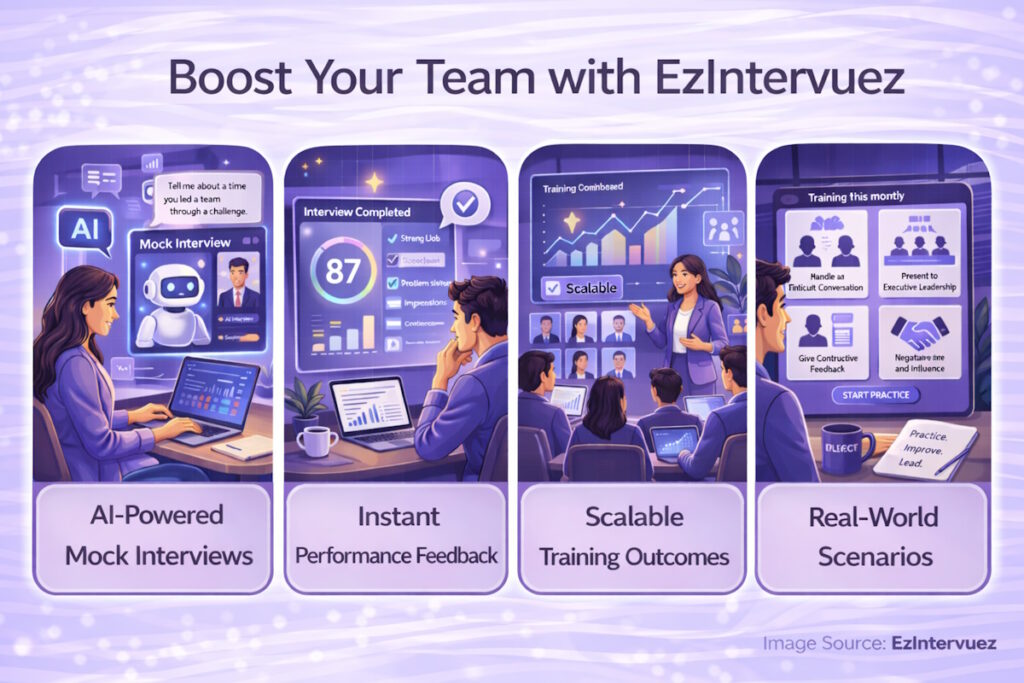
- AI-Powered Mock Interviews: Prepare your team for high-stakes interactions with realistic, role-specific interview simulations.
- Instant Performance Feedback: Our AI analyzes communication, clarity, and confidence, providing actionable insights that traditional training simply cannot match.
- Scalable Training Outcomes: Whether you are a small startup or a large training institute, EzIntervuez allows you to track and improve outcomes across your entire organization with ease.
- Real-World Scenarios: From technical assessments to soft skills, our platform replicates the real-world environment your team needs to master.
Don’t let your team learn the hard way. Give them the tools to practice, perform, and excel. Visit www.ezintervuez.com today to request a free trial and see how our simulation based training solutions can drive your success.
